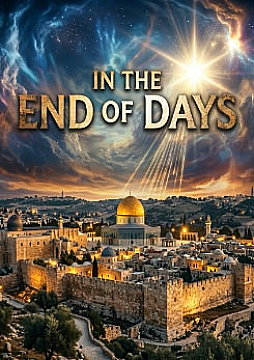
In the End of Days
Jerusalem: Three faiths. One city. The messianic awakening
The conquest of Jerusalem during the Six-Day War and its unification under the flag of Israel reawakened religious beliefs and trends within Judaism, Christianity, and Islam connected to the End of Days and the coming of the Messiah. The film tours biblical sites enveloped in holiness and mystery in Jerusalem, introducing extraordinary figures from the three religions who live and operate in the city out of a belief that these are indeed the days of the Messiah.
Why Jerusalem Drives Religious Tension
Jerusalem is unique among global cities because it is considered a sacred center by three major Abrahamic faiths: Judaism, Christianity, and Islam. However, because these religions share overlapping sacred geography—specifically centered around the historic Old City—their core theological traditions and apocalyptic end-times prophecies directly collide over the exact same pieces of land.
Theological Significance to Each Faith
Judaism:
Jerusalem is the historical and spiritual heart of Jewish identity. It was designated as the royal capital by King David over 3,000 years ago and was the site of the First and Second Jewish Temples built on Mount Moriah (the Temple Mount).
In Jewish belief, this site contains the Foundation Stone (Even ha-Shtiyya), considered the spiritual center of the universe and the physical connection point between God and Earth.
Orthodox Jewish theology holds that the arrival of the Messiah is tied to the gathering of the Jewish people and the eventual rebuilding of the Third Temple on Mount Moriah.
Christianity:
Jerusalem is where Jesus Christ preached, was crucified, resurrected, and ascended to Heaven. Key holy sites include the Church of the Holy Sepulchre and the Mount of Olives.
Christian messianic and apocalyptic theology (particularly within Christian Zionism and Evangelical movements) views Jerusalem as the epicenter for the Second Coming of Jesus Christ.
According to many Christian end-times interpretations, specific events in Jerusalem—including Jewish sovereignty over the city and the rebuilding of the Temple—are required precursors to the battle of Armageddon and Christ’s return.
Islam:
Jerusalem (Al-Quds, "The Holy") is the third-holiest city in Islam, after Mecca and Medina. It was the original direction (Qibla) toward which Muslims turned in prayer before Mecca.
Mount Moriah is known in Islam as the Haram al-Sharif (The Noble Sanctuary). Muslims believe the prophet Muhammad was transported here during the Night Journey (Isra and Mi'raj) and ascended to Heaven from the Foundation Stone, now enclosed by the Dome of the Rock. Adjacent to it stands the Al-Aqsa Mosque.
Islamic eschatology (end-times theology) also foresees Jerusalem playing a vital role in final events, including the arrival of the Mahdi and the descent of Jesus (regarded in Islam as a prophet) to defeat the false prophet (Dajjal).
The Core Conflict: Overlapping Sacred Space
The root of the tension lies in the fact that the holy sites physically overlap:
The Temple Mount / Haram al-Sharif is the single most sensitive religious site in the world.
To Muslims, the compound housing Al-Aqsa and the Dome of the Rock is an inviolable Islamic sanctuary.
To Jews, that very same elevated plateau is the site of the ancient Jewish Temples, the holiest place in Judaism.
Because orthodox Jewish messianic prophecies call for the rebuild of the Third Temple, and Christian messianic prophecies expect the same, many Muslims perceive Jewish control or prayer on the mount as an existential threat to Al-Aqsa.
The 1967 War as an Apocalyptic Catalyst
Before the 1967 Six-Day War, Jerusalem was divided between Israel (West Jerusalem) and Jordan (East Jerusalem, containing the Old City and holy sites).
When Israel captured East Jerusalem in 1967 and unified the city:
For many Jews, it was seen as a miracle of biblical proportions—a major step toward national restoration and divine redemption.
For messianic Christians, it was viewed as a fulfillment of biblical prophecy signaling that the End Times were drawing near.
For Muslims, the loss of Arab and Islamic control over Al-Quds was viewed as a profound crisis and a threat to one of Islam's holiest places.
This event transformed Jerusalem from a political and military conflict into an apocalyptic theater. It energized fundamentalist and messianic factions within all three religions, creating a environment where action taken by one group in the name of religious fulfillment is seen by another as a direct threat to their faith and survival.
Student or Faculty?
Watch all movies for FREE
Access through your university or college
Login through your university / college